Editorial website case study
Superintelligence Guide: a hard subject, in plain English.
We built a UK reference website that explains AGI and superintelligence clearly, sources its claims and shows readers exactly when each page was last checked.
Discuss your website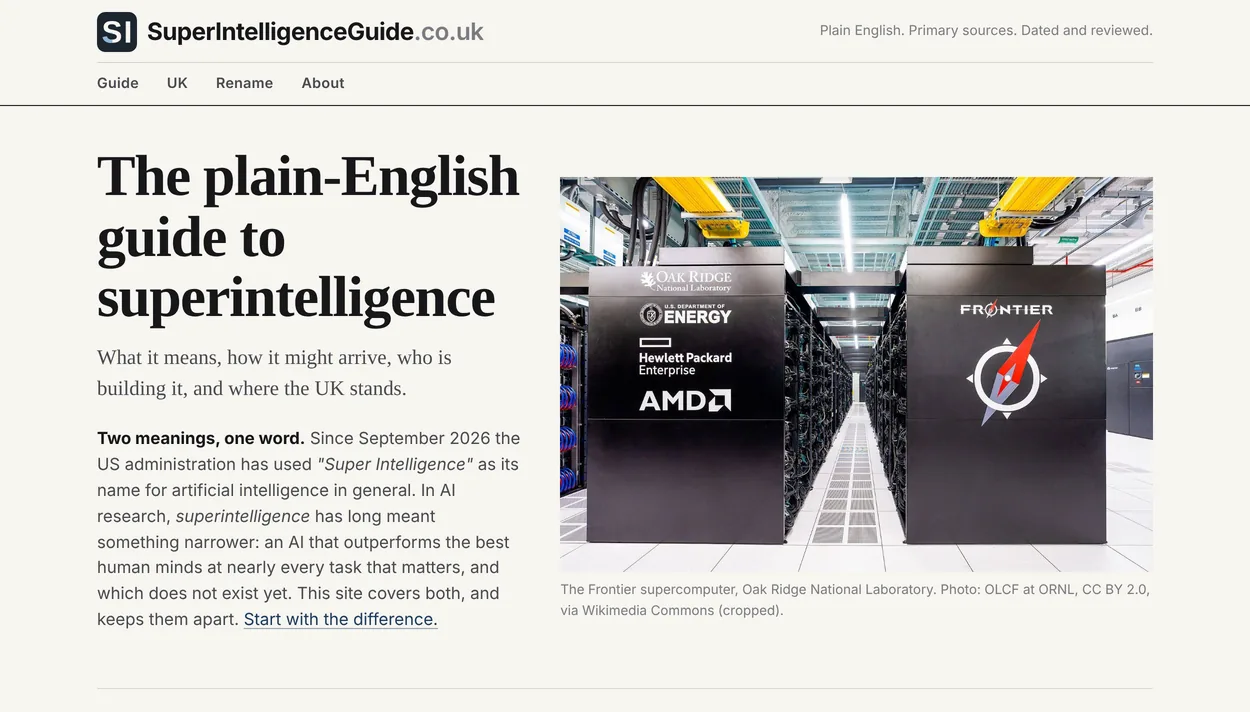
Written for interested readers, not specialists, with UK spelling and a glossary.
Claims link to the original paper, announcement, regulator or Hansard record.
Every page shows when it was published, last reviewed and how often it is checked.
Trust has to be visible
A subject full of hype needed a site that shows its working.
Superintelligence is written about constantly, and much of it is speculation presented as fact. The site had to earn trust from the first screen.
We made the editorial standards part of the design. The tagline states them, every article opens with a byline and a last-reviewed date, photographs carry their credit and licence, and an editorial policy page sets out what readers can expect.
The homepage tackles the most common confusion straight away: “superintelligence” now has two meanings, and the site keeps them apart.
Structure
A core guide that reads in order.
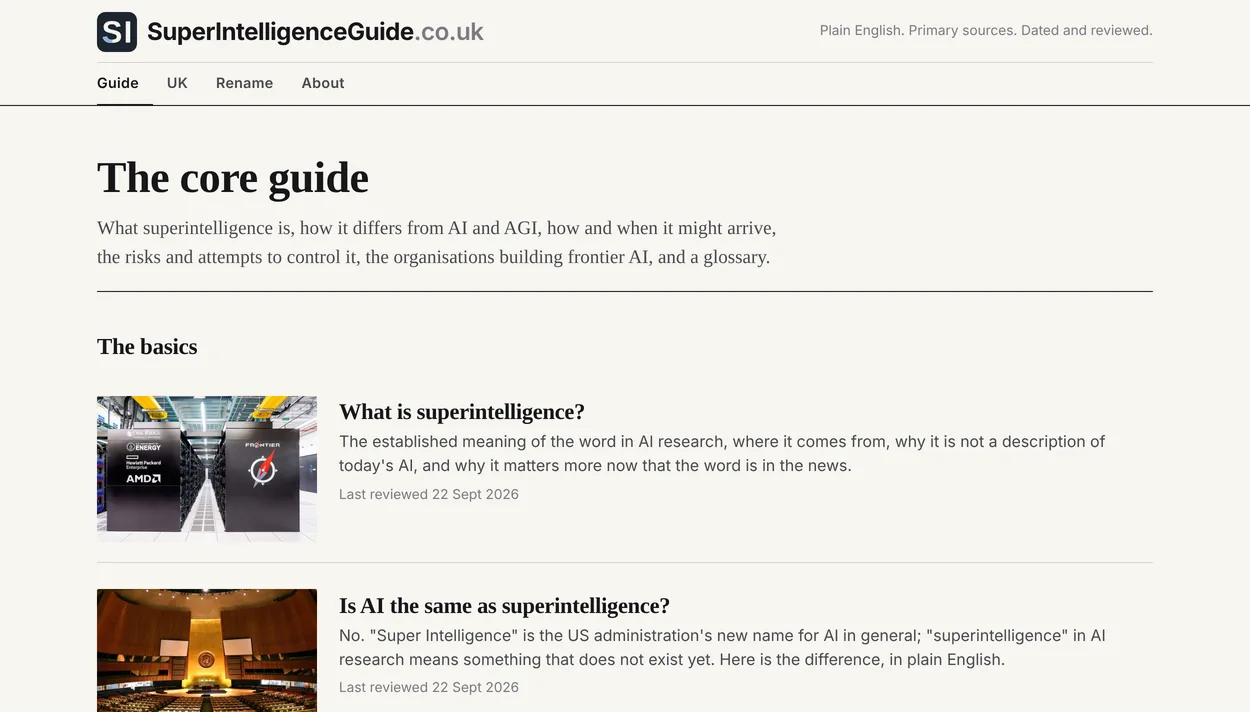
We arranged 25 guide articles so a newcomer can start with the basics and work forward: what superintelligence is, how it differs from AI and AGI, how and when it might arrive, the risks, attempts to control it and who is building it.
A separate UK section covers regulation, the AI Security Institute and what the government is actually delivering, so British readers can find the domestic angle without wading through US coverage.
Evidence reviews
Research pages with the data attached.
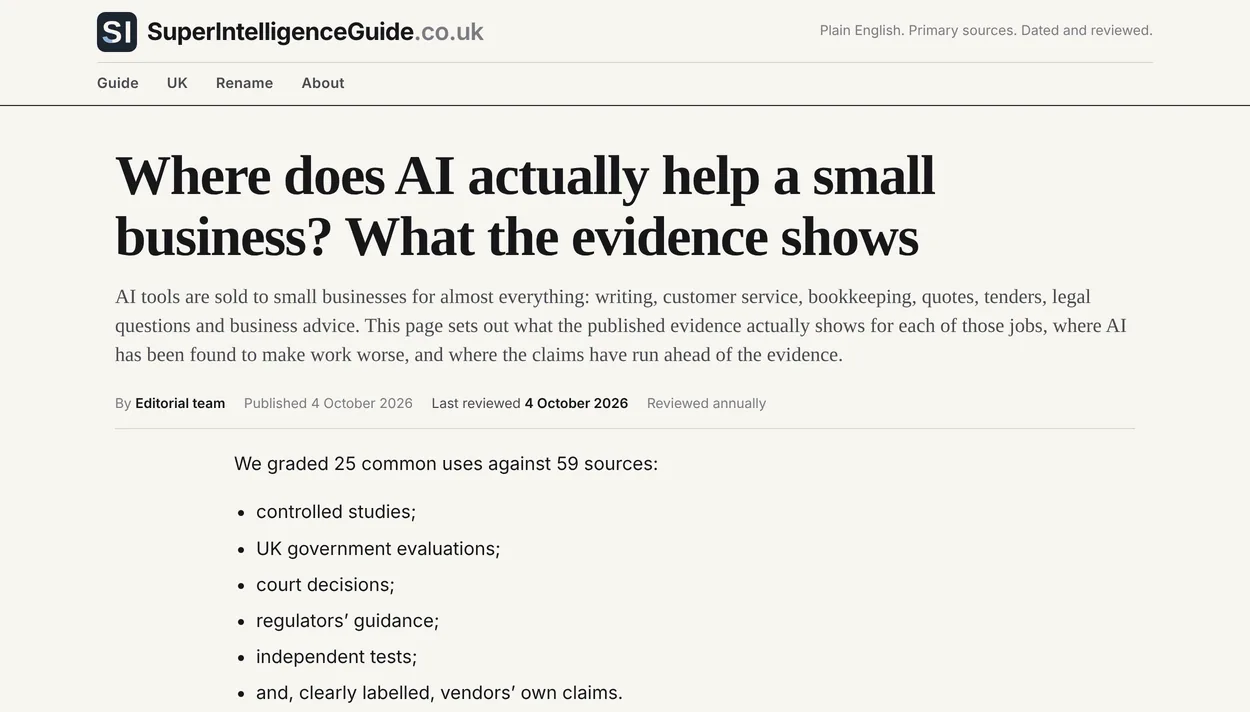
For practical questions, such as where AI actually helps a small business, we built long-form evidence reviews. Each use is graded, explained in a sentence and tied to its sources, with vendors’ own claims clearly labelled.
The underlying assessments and source lists can be downloaded as CSV files, so anyone can check the work.
Also built in
Details that help readers and search engines.
- A dated news timeline. A neutral record of a fast-moving story, kept separate from the evergreen guide and reviewed monthly.
- Article and FAQ structured data. Authorship, dates, images and common questions described for search engines.
- Clear review schedules. Each page states whether it is reviewed monthly, quarterly, twice a year or yearly.
- A guide for AI assistants. An llms.txt file points AI tools to the site’s core pages.
Need a publishing website people can trust?
We build clear editorial websites that explain complicated subjects, show their sources and stay easy to keep up to date.